
As an Amazon Associate, Luxeluma earns from qualifying purchases. Our guides compare published specs. We don’t test devices in a lab, and nothing here is medical advice.
LED Face Mask Buying Guide: 5 Things That Actually Matter
An LED face mask is a major purchase and a routine you’ll repeat several times a week for months. The marketing all sounds the same (“medical-grade,” “dermatologist-inspired,” “7-color therapy”), so here’s how to cut through it: the five things that actually differentiate masks, and how the best-known models compare on each.
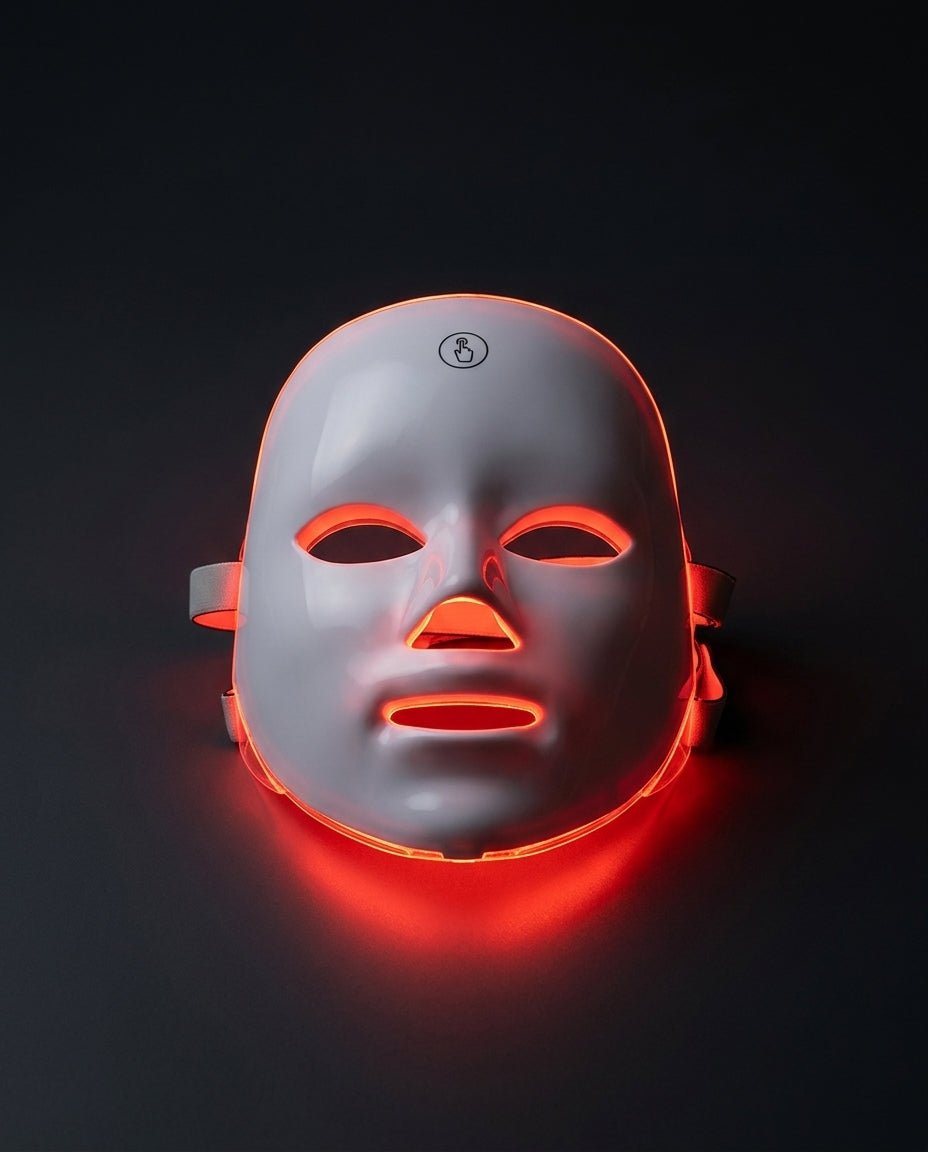
1. Published wavelengths (the non-negotiable)
If a mask doesn’t publish exact wavelengths in nanometers, skip it. This is the single fastest quality filter in the category.
What good looks like: 633nm red + 830nm near-infrared, the consensus pairing used by Omnilux, CurrentBody, and others. Our wavelength guide explains why these numbers keep recurring. A mask offering blue light in addition (like the Dr. Dennis Gross SpectraLite’s 62 blue LEDs) is a genuine differentiator for blemish-prone skin, but only if the blue wavelength is published too.
Red flags: “7 colors” with no nanometer values, wavelength ranges so wide they’re meaningless (“600–700nm” as the entire spec), or specs that only appear in marketing copy and never in a manual or technical sheet.
2. LED count and coverage
LED count tells you about coverage, not power. A mask with 236 LEDs (CurrentBody Series 2: 110 red + 110 near-infrared + 16 deep near-infrared) covers the face more evenly than a 132-LED mask. But evenness only matters up to the point of full coverage. Past that, you’re paying for redundancy.
More useful than raw count: whether the LEDs are dual-wavelength bulbs. The Omnilux Contour Face uses 66 bulbs with 2 LEDs each (132 total), each bulb emitting both red and NIR. That design means every point on the mask delivers both wavelengths. That’s arguably better coverage logic than separate red-only and NIR-only zones.
3. Session length and the routine you’ll actually keep
| Device | Session | Frequency (brand guidance) |
|---|---|---|
| Dr. Dennis Gross SpectraLite FaceWare Pro | 3 min | Daily per manual |
| Omnilux Contour Face | 10 min | 3–5x/week for 4–6 weeks, then maintenance |
| CurrentBody Series 1 / Series 2 | 10 min | 3–5x/week for 8 weeks |
All figures as published by the brands. The honest math: a 10-minute mask used 4 times a week is 40 minutes weekly. Over 8 weeks, that’s more than 5 hours of your life wearing a glowing mask. The SpectraLite’s 3-minute cycle is meaningfully easier to sustain, which counts for a lot in a category where consistency is the entire game.
Ask yourself which session length you’d still be doing in month three. Then buy that one.
4. Fit: the spec nobody publishes (but everyone should)
Light obeys the inverse-square law: double the distance from skin, quarter the dose. A mask that gaps at the nose or floats off the cheeks is delivering less than its LED count suggests.
What to look for:
- Flexible silicone that contours rather than a rigid shell. Both Omnilux and CurrentBody use flexible builds for this reason.
- Adjustable straps: the SpectraLite ships a detachable adjustable head strap; Omnilux includes head straps and a controller you wear or clip.
- Eye coverage design. Some masks leave the eye area open, others cover it. Neither is automatically better, but check whether the brand supplies or recommends eye protection, especially for blue-light modes.
Fit is the one thing you can’t fully evaluate from a spec sheet. Retailers with good return windows (30–60 days) matter here. A mask that doesn’t sit right on your face shape is a return, not a compromise.
5. Clearance, warranty, and the paperwork
- FDA clearance. The Dr. Dennis Gross SpectraLite and Omnilux Contour Face are both FDA-cleared (Class II). Clearance means the device went through regulatory review for its stated indications. It’s a meaningful quality signal, not marketing fluff. Note that clearance applies to specific indications on the label; read what those are.
- Warranty. Omnilux publishes 2 years on the device, 1 year on the controller. The SpectraLite carries a 1-year limited warranty per its Sephora listing. At these prices, a sub-1-year warranty would be a red flag.
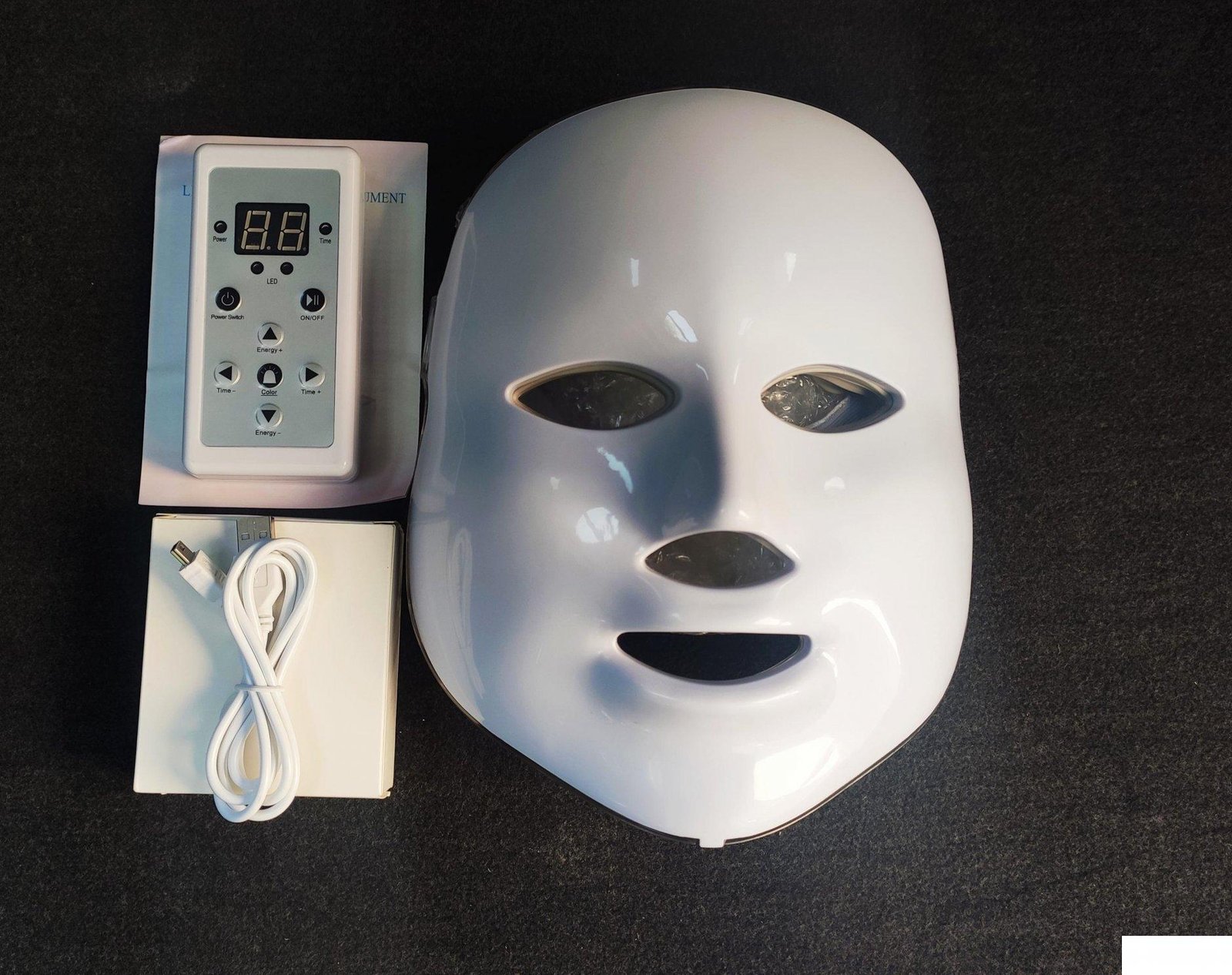
- What’s in the box. Count the extras: charging cable, controller, straps, storage bag, manual. The SpectraLite includes a storage bag and quick-start guide; Omnilux includes the controller, global plug adaptors, and a carry bag. You’ll use all of it.
Head-to-head: the four masks that publish real specs
| SpectraLite FaceWare Pro | CurrentBody Series 2 | Omnilux Contour Face | |
|---|---|---|---|
| Wavelengths | Red + blue, 3 modes | 633 + 830 + 1072nm | 633 + 830nm |
| LEDs | 162 (100 red, 62 blue) | 132 (66 dual bulbs) | 236 (110+110+16) |
| Session | 3 min | 10 min | 10 min |
| FDA-cleared | Yes | UKCA registered (per brand) | Yes |
| Price | Check price on Amazon | Check price on Amazon | Check price on Amazon |
| Standout trait | Only one with blue light; shortest session | Most published data; 3rd wavelength | Dual-wavelength bulbs; 2-yr warranty |
Prices and specs as published by the brands and major retailers; check current listings before buying.
Which mask for which person
- Blemish-prone skin is the top concern: the SpectraLite FaceWare Pro. It’s the only one here with a blue-light mode, and its 3-minute sessions are the easiest routine to keep.
- You want the most transparent spec sheet: CurrentBody Series 2: three published wavelengths, per-band LED counts, and a stated 30mW/cm² power density.
- You want the longest warranty and simplest story: Omnilux Contour Face: dual-wavelength bulbs, 2-year device warranty, and the most established clinical branding.
- You’re deciding between light and current: read our microcurrent explainer. LED targets the look of skin quality; microcurrent targets the look of contour. Different jobs.
Buying checklist (save this)
- Exact wavelengths published in nm? (Need: yes)
- Power density (mW/cm²) published? (Want: yes)
- Session length fits your routine? (3 min vs 10 min is a lifestyle choice)
- FDA-cleared or equivalent registration? (Want: yes)
- Warranty ≥ 1 year? (Need: yes)
- Return window ≥ 30 days? (Need: yes. Fit can’t be judged from photos)
- Blue light mode, if blemishes are your concern? (Only SpectraLite here)
If a mask fails checks 1, 5, or 6, keep shopping. The category has enough transparent options that you never need to gamble.
Frequently asked questions
Do I need the most expensive mask?
No. Price tracks brand, warranty, and extras more than wavelength quality. The core 633/830nm pairing is similar across the premium tier. Pay for the routine you’ll keep and the warranty that protects it.
Can I use an LED mask with my existing skincare?
Brands generally advise using masks on clean, dry skin before serums and moisturizers. Some specifically warn against applying actives underneath. Check your device’s manual; the guidance varies.
How soon should I expect to see anything?
Brand guidance clusters around 4–8 weeks of consistent use (3–5 sessions weekly). Anyone promising overnight transformation is not describing LED therapy.
How we research
Luxeluma compares manufacturer-published specifications: wavelengths, LED counts, session times, clearance status, and pricing as stated by the brands. We don’t run lab tests, and cosmetic devices aren’t medicine: nothing on this page diagnoses, treats, or prevents any condition.